
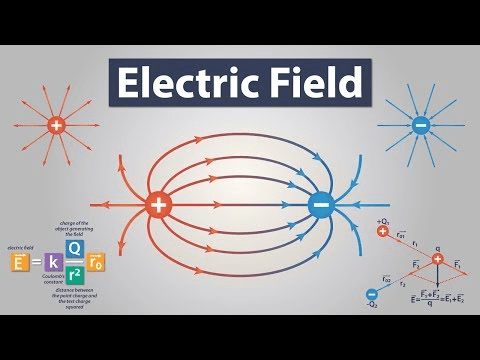
Electric fields are a fundamental aspect of electromagnetism, influencing how charged particles interact with one another. To grasp electric fields, it’s essential to consider their sources, effects, and how they shape our understanding of physics.
What is an Electric Field?
An electric field is a region around a charged object where other charged objects experience a force. This force can either attract or repel, depending on the nature of the charges involved. The strength and direction of an electric field can be visualized using field lines, which emanate from positive charges and terminate at negative charges.
Sources of Electric Fields
The primary sources of electric fields are charged particles. When a particle carries an electric charge, it creates an electric field in the surrounding space. The intensity of this field diminishes with distance from the charge, following specific mathematical relationships.
Effects of Electric Fields
Electric fields have several notable effects:
- Force on Charges: When another charged particle enters an electric field, it experiences a force proportional to the strength of the field and the amount of charge it carries. This interaction is pivotal in many physical phenomena.
- Field Interaction: Electric fields can interact with one another. For instance, when two charged objects are brought close together https://www.indianaupdates.com/understanding-stock-dividends/, their electric fields will influence each other, leading to changes in the forces they exert.
- Potential Energy: Electric fields also relate to potential energy. A charged object in an electric field possesses potential energy based on its position relative to other charges. This energy can be converted to kinetic energy as the charged object moves within the field.
Measuring Electric Fields
Electric fields are measured in volts per meter (V/m). The measurement quantifies how much potential difference exists over a given distance. This helps scientists and engineers determine how electric fields will affect various systems, from electrical circuits to biological tissues.
Applications in Technology
Electric fields play a crucial role in numerous technologies:
- Capacitors: Used in circuits to store energy, capacitors rely on electric fields to function effectively.
- Electrostatic Precipitators: These devices use electric fields to remove particles from gases, proving invaluable in pollution control.
- Medical Devices: Techniques like electrophoresis employ electric fields to separate molecules, aiding in medical diagnostics and research.
Conclusion
Understanding electric fields is vital in the realm of physics and engineering. By exploring how charged particles interact and the resulting effects, we gain insights into a wide array of natural phenomena and technological applications. This foundational knowledge continues to drive innovations across various fields, highlighting the importance of electric fields in both theory and practice.
 Horizon Legal