

Key Digital Ups Its Keypad with Telnet and Variable Programming

White Chickens In Poultry House 10

In the realm of automotive engineering, Honda’s 1.5-liter turbocharged 4-cylinder engine stands as a paragon of performance, efficiency, and dependability. Hailing from the “L-Series” engine family, which has graced roads globally since 2001, this engine has become a benchmark for excellence. Since its U.S. debut in the 2016 Honda Civic, the 1.5-liter Turbo has seen eight iterations, producing between 174 and 205 horsepower (SAE net) across various applications, with over 3 million units sold.

Engine Construction

To ensure minimal weight, the engine block is crafted from die-cast aluminum, augmented with individual reinforced main bearing caps for enhanced structural integrity. The cast-in iron cylinder liners bestow enduring durability. Each journal of the lightweight forged-steel crankshaft is meticulously micropolished to diminish internal friction.

The connecting rods, forged from a lightweight, high-strength steel, are heat-forged in a singular piece and then “crack separated” to produce a robust, yet lightweight rod with a precisely fitted bearing cap.

The pistons, designed with “cavity-shaped” crowns, create a high-tumble intake charge that further refines combustion efficiency. The piston’s skirt is optimized to reduce reciprocating weight, thereby minimizing vibration and enhancing operational efficiency. Twin oil jets, aimed at the underside of each piston crown, maintain piston coolness to prevent detonation, while ion-plated piston rings reduce friction, enhancing overall efficiency.

DOHC Cylinder Head and Valvetrain

The lightweight DOHC cylinder head is composed of pressure-cast aluminum alloy, with the exhaust manifold integrated directly into the cylinder head. This integration eliminates the need for a separate exhaust manifold, streamlining design and reducing weight. Other weight-reduction measures include smaller M12 spark plugs and thin-walled hollow camshafts.

A low-friction, silent chain drives the dual overhead cams, with maintenance-free operation throughout the engine’s lifespan. Sodium-filled exhaust valves are cooled via an exhaust port cooling jacket, as opposed to the enriched fuel mixtures found in many turbocharged engines. This allows for a leaner mixture, reducing emissions, and enhancing both fuel efficiency and power.

Variable Timing Control™ (VTC™) independently adjusts the phase of both intake and exhaust camshafts, optimizing cam timing to match driving conditions. At light loads, valve overlap increases to mitigate pumping losses and improve fuel efficiency. During low engine speeds with high loads, such as initial acceleration, valve overlap is augmented to enhance the scavenging effect, boosting torque and responsiveness. In high-speed, high-load scenarios, overlap is reduced to maximize engine output through improved intake and scavenging.

Introduced with the 2018 Accord, Variable Valve Timing and Lift Electronic Control (VTEC®) has since been incorporated into other engine versions. This system, in synergy with VTC™, adjusts valve lift, timing, and duration of exhaust valves, improving gas scavenging and overall performance across the engine speed spectrum.

Fuel Delivery System

The engine utilizes a high-pressure, direct-injection pump featuring pulsation suppression and variable pressure control to optimize injector performance. Multi-hole injectors deliver fuel directly into each cylinder, enhancing fuel atomization and combustion efficiency.

This precise control allows the multi-hole injectors to create an ideal stoichiometric fuel/air mixture for superior emissions control, adapting to conditions for optimal performance. During cold starts, fuel is injected on the compression stroke, creating a weak stratified charge that aids in startup and minimizes exhaust emissions before reaching normal operating temperature. Once warmed, fuel is injected during the intake stroke, maximizing power and fuel efficiency, with the high-tumble intake port design further improving volumetric efficiency and reducing knock.

Turbocharging System

For enhanced responsiveness, a compact MHI TD03 turbocharger is employed. Its single-scroll housing design enables boost generation even at lower throttle openings and engine speeds. The electrically actuated wastegate provides precise boost pressure control.

Cooling is managed by a large, low-restriction intercooler, strategically positioned at the car’s front to benefit from unobstructed airflow. The intercooler mitigates intake air temperature, increasing density and performance. Lightweight resin composite inlet pipes connect the intercooler, reducing the overall weight of the turbo system.

10th-Generation Civic (2016-2021)

In the U.S., the 1.5-liter Turbo (L15B7) first appeared in the 10th-generation Civic Sedan and Coupe in EX-T, EX-L, and Touring trims. With a peak boost of 16.5 psi, it generates 174 horsepower (SAE net @ 6,000 rpm) and 162 lb.-ft. (SAE net @ 1,700-5,500 rpm), representing a notable increase of 16 horsepower and 24 lb.-ft. of torque over the standard naturally aspirated 2.0-liter engine.

The 10th-generation Civic Hatchback models were also equipped with this turbocharged engine, though the Sport and Sport Touring variants featured the L15BA version, delivering 180 horsepower (SAE net @ 6,000 rpm) with the same boost levels due to a freer-flowing center-exit exhaust system and premium fuel benefits. When paired with a manual transmission and premium fuel, peak torque increased to 177 lb.-ft. (SAE net @ 1,900-5,000 rpm).

The 2017 Civic Si Sedan and Coupe sported a 205-horsepower variant (L15B7 High Output) exclusively with a manual transmission, achieved by increasing boost to 20.3 psi and utilizing premium fuel.

5th-Generation CR-V (2017-2022)

The 2017 model year introduced the 5th-generation CR-V, which included the turbocharged 1.5-liter engine (L15BE) in EX, EX-L, and Touring trims. Since 2020, this engine has been standard across all non-hybrid versions of the compact SUV, producing 190 hp (SAE net @ 5,600 rpm) and 179 lb.-ft. of torque (SAE net @ 2,000-5,000 rpm).

In this application, the pistons have a reshaped crown, lowering the compression ratio from 10.6:1 in the Civic to 10.3:1, and the turbocharger employs a 9-blade turbine impeller to allow an 18.5 psi boost with regular unleaded fuel. The induction system also benefits from a 4% improvement in overall flow.

10th-Generation Accord (2018-2022)

The 10th-generation Accord debuted the 1.5-liter Turbo in LX, EX, EX-L, Touring, and Sport trims. By 2022, it remained available in the Accord LX, Sport, Sport SE, and EX-L trims.

The 1.5-liter Turbo (L15BE with VTEC®) in the Accord closely resembles the CR-V version but features 20.2 psi of turbo boost and the inaugural application of VTEC® on the 1.5-liter Turbo. This integration enhances performance across the rev range by optimizing gas scavenging.

The Accord’s engine includes a new “4 into 2” exhaust manifold design, which groups exhaust from cylinders 1 and 4, and 2 and 3, with separate exit ports to the turbocharger. This design improves exhaust flow efficiency and low-rpm response, resulting in ratings of 192 hp (SAE net @ 5,500 rpm) and 192 lb.-ft. of torque (SAE net @ 1,600-5,000 rpm) on regular unleaded gasoline.

11th-Generation Civic (2022-present)

The 11th-generation Civic Si now features a 200 hp (SAE net @ 6,000 rpm) engine (L15CA) with a redesigned 11-blade turbine impeller, 17.8 psi of boost, VTEC®, and a 10.3:1 compression ratio. This version maintains improved output between its 6,000-rpm peak and 6,600 rpm redline compared to previous Si models and achieves a peak torque of 192 lb.-ft. at 1,800 rpm.

The 11th-generation Civic Sedan EX and Touring trims, along with the Civic Hatchback EX-L and Sport Touring, are powered by the 1.5-liter Turbo (L15B7 with VTEC®). Updates to this engine improve output, fuel efficiency, and emissions. Notably, VTEC® now enhances exhaust cam efficiency, and the “4 into 2” exhaust manifold design aids performance. The turbocharger’s new flow path and reshaped 11-blade turbine impeller further optimize pressure generation.

11th-Generation Accord (2023-present)

The current Accord LX and EX grades feature the refined 1.5-liter turbocharged 4-cylinder engine. Honda continues to advance internal combustion technology, even as it transitions to electrified vehicles. The updated engine delivers 192 horsepower (SAE net @ 6,000 rpm) and 192 lb.-ft. of torque (SAE net @ 1,700-5,000 rpm), showcasing enhanced performance and emissions.

This engine benefits from a high-efficiency, high-response turbocharger, an electrically actuated wastegate, and an advanced valve control system combining intake and exhaust Variable Timing Control (dual VTC) with Variable Valve Timing and Lift Electronic Control (VTEC). This system enhances performance by adjusting valve lift, timing, and duration.

The unique “4 into 2” exhaust manifold design optimizes exhaust flow, and a new catalytic converter aids in achieving LEV3 SULEV 30 emissions certification. Additional features include an idle-stop system for fuel economy and reduced emissions, a high-rig

The Emergence of Online Political Communities in Thailand

What is the Difference Between an Independent Variable and a Dependent  Variable?

Since the 2014 coup d’état, Thailand has witnessed a significant transformation in its political discourse, largely driven by the rise of online political communities. As traditional avenues for public expression became increasingly restricted, digital platforms have emerged as critical spaces for political dialogue and activism. This shift has been particularly pronounced in the 2020s, a period marked by the flourishing of youth-led, pro-democracy movements that have harnessed the power of social media to challenge the status quo and advocate for democratic reforms.

The Royalist Marketplace: A Case Study

One of the most notable examples of influential online political groups in Thailand is the Royalist Marketplace, founded by Pavin Chachavalpongpun, a political-exile scholar. This private Facebook group initially attracted over 2 million members and quickly became a focal point for discussions about the Thai monarchy. The group’s discussions, which are often candid and sometimes satirical, offer a critical perspective on an institution that holds a revered status in Thai society.

The significance of the Royalist Marketplace extends beyond its size and engagement. When the original version of the group was geo-locked by the Thai government, Pavin Chachavalpongpun responded by creating a new group. This new iteration saw rapid growth, amassing over 1.1 million members within its first week and reaching a current membership of 2.3 million. The group’s ability to sustain such high levels of engagement demonstrates its substantial impact on the political landscape.

The Role of Major Political Parties in Social Media

In response to the growing influence of online communities, major Thai political parties have established robust presences on various social media platforms. The Move Forward Party (MFP), an opposition party, boasts over a million followers on Facebook. Meanwhile, the Pheu Thai Party (PTP), a key player in the governing coalition, has garnered close to 939,000 followers on the same platform. These parties use social media not only to disseminate information but also to engage with supporters and mobilize political action.

Political candidates themselves have also leveraged social media to build personal brands and connect with voters. Pita Limcharoenrat, for instance, has amassed over 2 million followers across his social media channels. Similarly, Rukchanok “Ice” Srinork, an MFP parliamentarian, engages with her half-a-million followers through platforms like TikTok and Facebook, offering insights into her life as an MP and fostering a more personal connection with her audience.

The Rise of Unofficial Online Sites

In addition to official party and candidate pages, a myriad of unofficial online sites has emerged. These platforms, created by supporters of various parties and candidates, serve as influential information channels. Some of these sites are paid and professionally managed, while others are organic, driven by grassroots enthusiasm. They contribute to the political discourse by providing alternative viewpoints and mobilizing support in ways that traditional media and official channels may not.

Conclusion

The digital transformation of Thailand’s political landscape underscores the growing importance of online communities and social media in shaping public discourse and political engagement. The rise of influential groups like the Royalist Marketplace and the active presence of political parties and candidates on social media platforms reflect a broader shift towards a more dynamic and participatory political environment. As these online spaces continue to evolve, they will undoubtedly play a crucial role in Thailand’s political future, influencing both public opinion and the broader political landscape.

Silva’s Brilliance and Fernandes’s Finish Ensure Portugal’s Progress in Euro 2024

Photos: Celebrations as Spain wins Euro 2024 football crown for fourth time  | UEFA Euro 2024 News | Al JazeeraOn a commanding Saturday evening, Portugal surged into the knockout stages of Euro 2024 with a decisive 3-0 victory over Turkiye, clinching the top spot in Group F. Bernardo Silva’s exquisite strike in the 21st minute, an inadvertent own goal by Samet Akaydin shortly thereafter, and a second-half tap-in by Bruno Fernandes ensured a seamless triumph before an enthusiastic Turkish contingent in Dortmund. Portugal, with aspirations of securing their second European Championship title following their 2016 conquest, demonstrated their formidable prowess against Vincenzo Montella’s spirited yet limited Turkiye squad.Cristiano Ronaldo, at 39, remains poised for additional opportunities to set a record as the oldest goalscorer in European Championship history. Coach Martinez affirmed on Friday that Ronaldo is in optimal condition to participate in matches every few days. Ronaldo, displaying his characteristic selflessness, set up Fernandes for a straightforward goal in the 56th minute after navigating Turkiye’s offside trap. Post-match, Ronaldo even took a moment to pose for a selfie with a young fan who had ventured onto the pitch midway through the second half.Martinez’s squad, having amassed a perfect six points, is set to face one of the four best third-place teams in the next round and will approach their final group encounter against Georgia with no pressure. Conversely, Turkiye faces a critical showdown against the Czech Republic on Wednesday, needing at least a draw to secure second place.Turkiye’s ardent supporters thronged the Westfalenstadion in droves, with extensive traffic congestion surrounding the venue hours before the 6:00 p.m. (1600 GMT) kick-off. Fans perched atop vehicles led chants amidst the sea of supporters inching toward the stadium. Once inside, the predominantly Turkish crowd unleashed a cacophony of whistles and jeers as Portugal commenced their pre-match warm-up.However, the disparity in quality between the two teams became evident once the match began. Portugal took the lead through Silva, who confidently dispatched Nuno Mendes’s deflected low cross. Shortly thereafter, Akaydin’s ill-fated backpass inadvertently handed Portugal a two-goal advantage as Zeki Celik and goalkeeper Altay Bayindir struggled in vain to avert the ball from crossing the line.These early goals and the dominant display by the Portuguese players subdued the passionate crowd. The match’s outcome was solidified when Fernandes converted a pass from his former Manchester United teammate Ronaldo. Portugal’s supporters then amplified their celebrations, reveling in their progression to the last 16.Midway through the second half, the stadium erupted in applause as a diminutive fan dashed onto the pitch. The interruption occurred as Nelson Semedo replaced Joao Cancelo for Portugal. The young fan, seizing the opportunity, managed to secure a photo with a bemused Ronaldo before embarking on a playful sprint, evading security personnel until he was eventually escorted off the field. Ronaldo’s amusement waned when several larger fans attempted to replicate the stunt for selfies, only to be met with boos and denied photos before being escorted away by stewards.
Dani Flow’s Controversial Statements on Sexual Abuse and Feminist Movements

Tickets for Dani Flow in Zapopan | Wegow

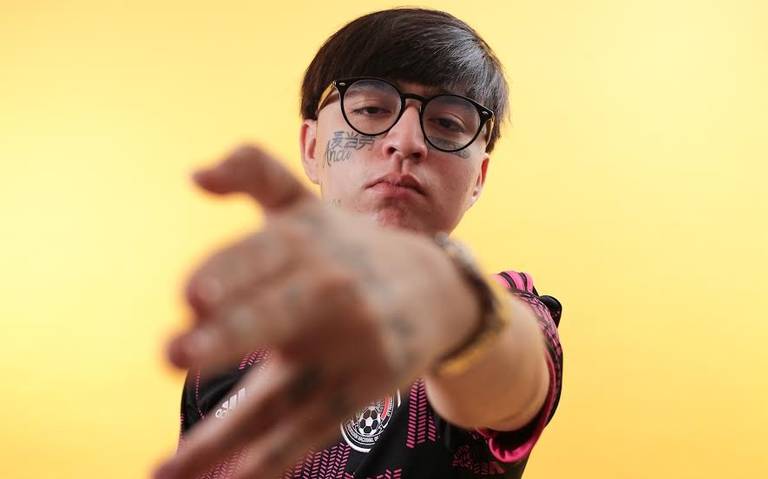
Dani Flow, a notable figure in the music industry, recently came under fire for his inflammatory comments regarding the sexual abuse case involving YouTuber Ricardo González, popularly known as “Rix,” and Nath Campos. The case gained significant attention in 2021 when González admitted guilt in the sexual abuse of Campos and was subsequently granted bail. Flow’s remarks, made in Spanish, have sparked outrage and controversy across various social media platforms and beyond.

In a shocking statement, Dani Flow expressed his disdain for Campos and others who have been vocal about the incident. He was quoted as saying, “That girl is worthless. I hate those girls and the ones who go out to vandalize the streets. They shouldn’t even be called girls.” His comments reflect a troubling disregard for the gravity of the situation and the victims involved. By labeling Campos and others who protest as “worthless,” Flow not only trivializes the trauma experienced by victims but also promotes a harmful narrative that undermines the validity of their experiences.

Flow’s critique extended beyond the specific case to a broader commentary on feminist movements and protests. He voiced his disapproval of feminist activism, expressing a desire that his daughter would not engage with such movements. “I don’t have a problem with people’s ideas, but I do have issues with them going out and causing chaos,” he remarked. This statement reveals a dismissive attitude towards the feminist cause, which seeks to address and combat systemic issues of gender inequality and violence. By labeling feminist protests as “chaos,” Flow’s comments seem to dismiss the legitimate grievances and demands for justice that these movements represent.

The backlash against Dani Flow is not only a reaction to his controversial statements but also an indication of broader concerns about the ideological stances prevalent among today’s youth. His remarks challenge the assumption that younger generations are inherently more progressive and socially aware. Instead, his comments suggest that misogynistic and regressive viewpoints still persist within this demographic, raising questions about the true nature of their social consciousness.

Furthermore, the role of social media in facilitating and amplifying such harmful rhetoric cannot be overlooked. Platforms that allow individuals to express their opinions, whether anonymously or openly, have also become venues for the propagation of misogynistic and hateful discourses. Dani Flow’s comments are a stark reminder of how these platforms can be used to perpetuate negative and dangerous ideologies, influencing the perspectives and behaviors of young audiences.

The intersection of celebrity influence and social media dynamics presents a complex landscape where public figures like Dani Flow wield significant power in shaping public opinion. The controversial nature of his statements underscores the responsibility that comes with such influence, highlighting the need for greater accountability and sensitivity in public discourse.

In conclusion, Dani Flow’s comments on the sexual abuse case involving Ricardo González and Nath Campos, as well as his disparaging remarks about feminist movements, have sparked significant controversy. His statements not only reflect a troubling disregard for the victims of sexual violence but also raise concerns about the ideological inclinations of today’s youth and the role of social media in perpetuating harmful narratives. The backlash against Flow serves as a critical reminder of the importance of addressing and challenging misogynistic and regressive viewpoints in both public and private spheres.

Argentina y su Triunfo en la Final: Una Era Dorada

Argentina es conocida por su habilidad para enfrentarse a finales reñidas y emocionantes, ya sea en la victoria o en la derrota. La selección argentina de fútbol, bajo la dirección de Lionel Scaloni, ha demostrado que solo sabe ganar, y en esta ocasión reafirmó su dominio en el fútbol mundial con una victoria que podría marcar el cierre de una era histórica. En una final vibrante, Argentina venció a Colombia 1-0 en tiempo extra, consolidando su estatus como el mejor equipo del mundo.

Un Torneo con Menos Presión para la Albiceleste

La selección argentina llegó a la final con una notable ventaja en términos de preparación y confianza. A diferencia de Colombia, que tuvo que enfrentarse a desafíos más exigentes a lo largo del torneo, Argentina disfrutó de un camino relativamente menos complicado debido a las llaves que le tocaron. Esta diferencia en el nivel de competencia no desmerece el logro de Argentina, sino que resalta la consistencia y la calidad del equipo a lo largo del torneo.

Lionel Messi: Un Líder Histórico

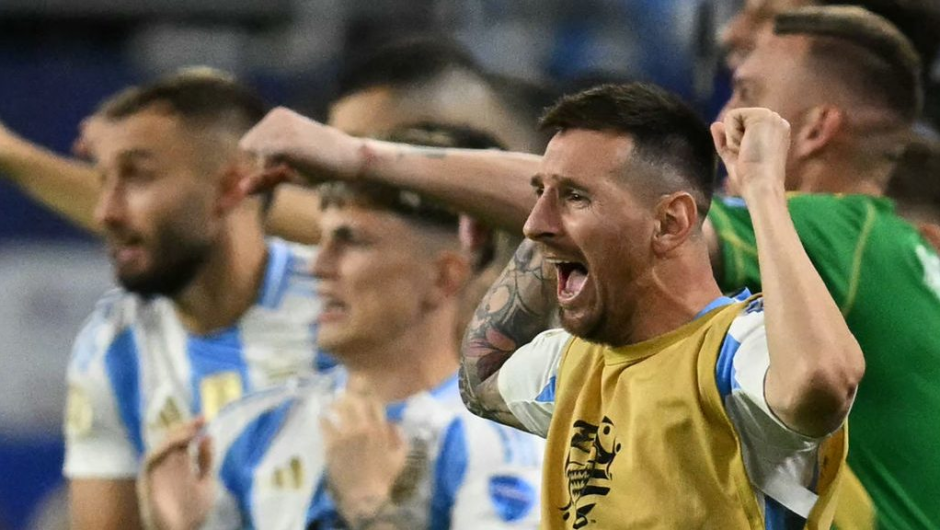
El regreso de Lionel Messi a su mejor forma fue un factor clave en el éxito de Argentina. Como líder indiscutible de la selección, Messi no solo aportó su talento y experiencia en el campo, sino que también ofreció una inspiración emocional para sus compañeros. Su capacidad para guiar al equipo a través de momentos críticos y su habilidad para marcar la diferencia en situaciones decisivas fueron evidentes en esta final. La presencia de Messi en el equipo representa la culminación de una generación dorada, una que ha experimentado tanto la alegría de la victoria como la tristeza de la derrota.

La Fortaleza de Argentina en la Final

En el partido decisivo contra Colombia, Argentina mostró una fortaleza que ha sido característica de su desempeño en torneos recientes. La final fue un enfrentamiento emocionante y competitivo, con ambos equipos luchando ferozmente por el título. A pesar de la calidad y el espíritu de lucha demostrado por Colombia, fue Argentina quien se impuso en el tiempo extra con un gol decisivo que selló su victoria. Este triunfo no solo refleja la habilidad técnica del equipo, sino también su fortaleza mental y capacidad para manejar la presión en momentos críticos.

La Confirmación del Dominio Argentino

Con esta victoria, Argentina no solo ganó el campeonato, sino que también reafirmó su posición como el equipo de fútbol más dominante del mundo en la última década. La capacidad de Argentina para mantener el favoritismo y la seguridad del campeón a lo largo de la competencia es un testimonio de la calidad y la profundidad de su equipo. Este triunfo marca el cierre de una era de jugadores legendarios y representa la continuación de una tradición de excelencia en el fútbol argentino.

Colombia: Un Rival Digno

A pesar de la derrota, Colombia demostró ser un oponente digno en la final. El equipo colombiano, que fue el mejor en términos de fútbol durante la competencia, presentó un desafío significativo para Argentina. La calidad del juego de Colombia a lo largo del torneo y su desempeño en la final reflejan el crecimiento y el potencial del fútbol en el país. La selección colombiana, aunque no logró el título, dejó una impresión duradera y demostró que está en camino de convertirse en una fuerza importante en el fútbol mundial.

Reflexión sobre la Era Dorada de Argentina

La victoria de Argentina en esta final marca el final de una era dorada para el fútbol argentino, caracterizada por una generación de jugadores legendarios y un éxito constante en torneos internacionales. La combinación de talento individual, liderazgo inspirador y una mentalidad ganadora ha definido esta era y ha dejado una marca indeleble en la historia del fútbol. A medida que Argentina celebra su éxito y se prepara para el futuro, el legado de esta generación continuará influyendo en el deporte y en los aficionados de todo el mundo.

El Futuro del Fútbol Argentino

Mientras Argentina celebra su reciente victoria, el futuro del fútbol argentino parece prometedor. La generación de jugadores que ha dominado el escenario internacional está haciendo espacio para una nueva ola de talentos jóvenes, que seguramente continuarán la tradición de excelencia. Con un enfoque en el desarrollo y el crecimiento continuo, Argentina seguirá siendo una potencia en el fútbol mundial y un referente para los equipos de todo el planeta.

Conclusión

El triunfo de Argentina en la final contra Colombia es un testimonio de la habilidad, el liderazgo y la fortaleza de una selección que ha demostrado ser la mejor del mundo. Con una combinación de talento excepcional y un espíritu indomable, Argentina ha cerrado una era histórica y ha establecido un estándar de excelencia en el fútbol. Mientras se despide de una generación dorada, el país se prepara para enfrentar el futuro con la misma pasión y determinación que ha caracterizado su éxito en los últimos años.

Georgia Receives a Rousing Welcome Upon Returning from the Euro 2024

Rodri lidera el XI de España más votado por los usuarios de Transfermarkt  para la Euro 2024 | VIVES.FUTBOL

In an extraordinary display of national pride, tens of thousands of Georgians thronged the streets of Tbilisi on Tuesday, waving their national flags in jubilant celebration of their football team’s remarkable journey in Euro 2024. This event marked a significant moment for the country, as it celebrated its debut appearance in the prestigious tournament.

The Georgian national football team, under the spotlight of international competition, delivered an impressive performance that captivated the hearts of their compatriots. Their journey through the Euro 2024 was a testament to their skill and determination. The team navigated the group stages with admirable tenacity, eventually advancing to the Round of 16—a milestone that underscored their significant progress on the European stage.

The streets of Tbilisi transformed into a vibrant mosaic of color and sound as supporters poured out to honor their team. The air was filled with a palpable sense of unity and celebration as Georgians from all walks of life gathered to pay tribute to their footballers. This enthusiastic reception highlighted the profound impact that the team’s performance had on the nation, sparking a wave of nationalistic fervor that swept through the city.

Despite their valiant efforts and the high hopes pinned on them, the Georgian squad faced a formidable opponent in the form of Spain. The match, which took place in the knockout stages, was a hard-fought contest that showcased the resilience and skill of both teams. Ultimately, the Spanish side emerged victorious, ending Georgia’s historic run in the tournament. The defeat, however, did little to dampen the spirits of the Georgian fans, who remained resolute in their support and admiration for their team’s achievements.

The turnout in Tbilisi was a testament to the significance of this event for Georgia. The celebratory atmosphere, marked by cheers, chants, and the waving of flags, was a vivid representation of the national pride that the Euro 2024 experience had ignited. It was not merely a celebration of the team’s performance but also a reflection of a nation’s unity and collective joy in their historical achievement.

The celebration also served as a moment of reflection for the team and its supporters. The journey through the Euro 2024 was not just a sporting triumph but also a source of inspiration and hope for the future. For many Georgians, the team’s participation in the tournament was a symbol of progress and potential, and the public’s enthusiastic reception was a fitting acknowledgment of their efforts.

In the wake of their departure from the tournament, the Georgian squad returned to a hero’s welcome, with the streets of Tbilisi echoing with the sounds of celebration. The outpouring of support and admiration from the public was a powerful reminder of the unifying power of sport and the deep connection between a nation and its football team.

As the team disembarked from their bus and approached the jubilant crowds, the atmosphere was electric with excitement and gratitude. The players, who had given their all on the field, were met with cheers and applause from a crowd that had followed their journey with unwavering support. This moment of triumph and celebration was a testament to the spirit of Georgian football and the bright future that lies ahead for the sport in the country.

The Euro 2024 experience has undoubtedly left an indelible mark on Georgia. The national team’s historic achievement and the overwhelming support from their fans have set a new benchmark for future endeavors. As the celebrations continued into the evening, the sense of pride and accomplishment was evident in every corner of Tbilisi, symbolizing the profound impact of this momentous event on the nation’s sporting landscape.

Spain and England Set to Clash in Euro 2024 Finale at Historic Berlin Venue

Image

BERLIN (AP) — The grand and somber Olympiastadion, a stadium shadowed by its past, will be the stage for the European Championship final between Spain and England this Sunday.

Constructed for the 1936 Olympic Games, Berlin’s iconic stadium carries the vestiges of World War II, a time-stamped relic that echoes its Nazi legacy.

Yet, the Olympiastadion stands as a symbol of rebirth, mirroring Germany’s journey from despotism to democracy post-World War II. It welcomed global audiences during the 1974 World Cup in the former West Germany and once again in 2006, 16 years post-reunification.

Hitler’s Architectural Vision

Adolf Hitler personally supervised the design and construction of this colossal 100,000-seat stadium, a project undertaken after the Nazi regime seized power in 1933, two years after securing the 1936 Games for Germany.

Initially indifferent to the Games, Hitler recognized their potential for propaganda, transforming his stance into fervent support. Plans to refurbish the existing national stadium were abandoned in favor of a grander vision—a new sports complex known as the Reich Sports Field. Werner March, the architect behind the Olympiastadion, drew inspiration from Rome’s Colosseum, aiming to evoke awe. The tapered Olympic Square, flanked by flagpoles and trees, was designed to amplify the dramatic approach, heightening the anticipation of visitors and making them feel integral to the spectacle.

At the height of construction, up to 2,600 workers labored to complete the Reich Sports Field in time for the Games, which commenced on August 1, 1936. The Nazi regime’s discriminatory policies were evident in the workforce composition, with mandates to employ only “compliant, non-union workers of German citizenship and Aryan descent.”

The stadium was adorned with a plethora of Nazi flags, and a prominent swastika crowned one of the towers holding the Olympic rings above the entrance. This symbol was removed in 1945 as the war concluded.

During the Games, the Nazi paramilitary SA, or Brownshirts, were ordered to halt their attacks on Jews, temporarily suspending their violence for the duration of the event. Despite the regime’s push to exclude Jewish athletes, two athletes deemed “half-Jewish” by the Nazis—fencer Helene Mayer and hockey player Rudi Ball—were permitted to compete for Germany. This was a calculated move to placate international critics, as noted by Ryan Balmer, a historian and Berlin resident.

Post-Olympics, the Reich Sports Field remained a venue for Nazi gatherings, including a 1937 visit by Italian dictator Benito Mussolini, where he was greeted by thousands of torch-bearing Nazis in the May Field, reportedly attended by up to 800,000 people.

Olympiastadion’s Wartime Survival and Postwar Era

Although the Olympiastadion and the Reich Sports Field sustained damage during the war, the stadium itself escaped the extensive destruction suffered by central Berlin. Surviving structures were repurposed, with Nazi symbols expunged.

Post-war, the Olympiastadion fell under British control as Berlin was divided among the four Allied powers—the Soviet Union, the U.S., France, and Britain. The British reopened the stadium in 1946 and maintained a military presence at the former Reich Sports Field until 1994.

The stadium underwent minimal changes after the war, achieving protected status in 1966. The most significant renovations occurred prior to the 2006 World Cup, when the stadium was outfitted with a new roof.

Present-Day Olympiastadion

Modern Germany confronts its Nazi past with transparency, ensuring that the horrors of that era are not forgotten. Information placards in English and German are strategically placed throughout the stadium to educate visitors about its historical significance.

While swastikas have been removed, some vestiges of the Nazi era remain, including an eagle on a pillar near Hertha Berlin’s training ground. The old bell from the Bell Tower still bears a Nazi eagle and Olympic rings, albeit with the swastika partially obscured.

As a gesture of post-war reconciliation, a conference room within the stadium and a road along the sports field’s southern perimeter have been named in honor of Jesse Owens, the African-American athlete who famously triumphed at the 1936 Olympics.

The stadium’s history elicits mixed emotions from visitors. Many fans attending matches, including the upcoming European Championship final, are more focused on the competition and may overlook the historical context provided.

Ryan Balmer, the historian, suggests that the stadium could benefit from more prominent reminders of its origins and the ideology it once symbolized. Similarly, Marian Wajselfisz, a Holocaust survivor and co-founder of the Jewish soccer club Makkabi Berlin, lamented the lack of awareness among spectators regarding the atrocities committed against Jews during the Nazi regime.

Entrevista de la UEFA a Hakan Çalhanoğlu: “Tenemos más esperanzas”

En una reciente entrevista con la UEFA, Hakan Çalhanoğlu, destacado jugador de la selección turca, habló sobre la preparación y expectativas del equipo para la Eurocopa, su experiencia personal y la influencia del entrenador Vincenzo Montella.

Preparación y expectativas para la Eurocopa

Çalhanoğlu destacó la importancia que tanto el cuerpo técnico como los jugadores han dado a este torneo. Desde la convocatoria temprana, el seleccionador ha dejado claro que este evento es crucial para el equipo. “Nuestro seleccionador nos convocó pronto porque sabe lo importante que es este torneo para nosotros. Nosotros también le damos mucha importancia,” afirmó el jugador. La preparación del equipo ha sido meticulosa, con entrenamientos intensos y un enfoque en mejorar tácticamente. Según Çalhanoğlu, la concentración ha sido excelente desde el primer día, y los resultados de los partidos han sido favorables, posicionándolos donde desean estar en la competición.

Primer gol en una Eurocopa

Hakan Çalhanoğlu también compartió sus impresiones sobre su primer gol en una Eurocopa, un momento significativo en su carrera. Describió cómo, en esa jugada, estaba preparado para recibir el balón y aprovechar cualquier oportunidad. “En realidad, en esa posición, quería que el balón viniera a mí. Sé que soy peligroso tanto dentro como fuera del área,” comentó. La secuencia del gol involucró varios intentos anteriores, con Kenan Yldz y İsmail Yüksek buscando marcar. Cuando İsmail encontró el espacio para pasarle el balón, Çalhanoğlu no dudó en disparar, resultando en un gol que fue un alivio para el equipo.

El desafío contra Países Bajos

El partido contra Países Bajos es un reto importante para Turquía. Çalhanoğlu reconoce la naturaleza impredecible del torneo, donde varios equipos favoritos han sido eliminados. La victoria en los octavos de final contra Austria, un equipo que consideró como uno de los más fuertes, fue un logro significativo. “Esperamos que nuestros seguidores estén presentes en Berlín para el partido contra Países Bajos. Tenemos más esperanzas y nos sentimos felices,” expresó. La presencia de los aficionados turcos es un gran incentivo para el equipo, y Çalhanoğlu espera que puedan brindar otra alegría a su país con una nueva victoria.

Posible récord en la Eurocopa

Con la posibilidad de convertirse en el jugador turco con más partidos en la historia de la Eurocopa, Çalhanoğlu se mostró humilde y agradecido. Rütü Reçber, una leyenda del fútbol turco, es el actual poseedor del récord. “Estoy feliz y orgulloso. También me siento honrado de ser el capitán de este equipo,” dijo. Para Çalhanoğlu, representar a su país es un gran honor y, aunque el récord no es su objetivo principal, se siente contento de poder alcanzarlo. “Al fin y al cabo, quiero representar a mi país de la mejor manera posible. Incluso cuando juego en Europa, mi corazón siempre está aquí,” añadió.

Vincenzo Montella y su impacto en el equipo

Çalhanoğlu tiene una relación cercana con el entrenador Vincenzo Montella, habiendo trabajado juntos anteriormente en el AC Milan. Describió a Montella como un entrenador abierto y dispuesto a compartir conocimientos. “Es un entrenador al que le gusta compartir. Me alegré mucho cuando se convirtió en seleccionador nacional,” comentó. Çalhanoğlu destacó la importancia de Montella en la mejora táctica del equipo, algo que se refleja en sus actuaciones en el campo. Además, el jugador habló sobre la conexión de Montella con los jugadores y los aficionados, destacando su humildad y calidez. “Nuestros jugadores también le han abrazado. Le quieren mucho,” dijo, resaltando la influencia positiva del entrenador.

Afición turca y su apoyo incondicional

Recordando la histórica campaña de Turquía en la Eurocopa de 2008, donde llegaron a las semifinales, Çalhanoğlu expresó su profundo agradecimiento hacia los aficionados turcos. “Yo también salí a la calle cuando vi los partidos en 2008. Hicimos convoyes con banderas turcas. Así que conozco ese sentimiento,” recordó. Ahora, como capitán de la selección nacional, siente un orgullo especial al representar a su país. Agradeció el apoyo constante de los seguidores y expresó su confianza en que continuarán apoyando al equipo en Berlín. “A veces, sueñas con cosas así. Y cuando esos sueños se hacen realidad, no puedes evitar la incredulidad,” concluyó.